Generic vs Brand Name Drugs: Same Medication, 90% Cheaper
By Vincent Couey, RxGrab founder. Reviewed by Vincent Wesley Couey. Updated .
Americans spent over $600 billion on prescription drugs in 2025. Roughly 90% of prescriptions filled are generics, saving the healthcare system hundreds of billions annually. Yet many patients still believe brand-name drugs are "better." This guide covers what the FDA actually requires, why generics are identical where it matters, and the handful of exceptions where brand-name might matter. For where to find the cheapest generics, see our pharmacy comparison.
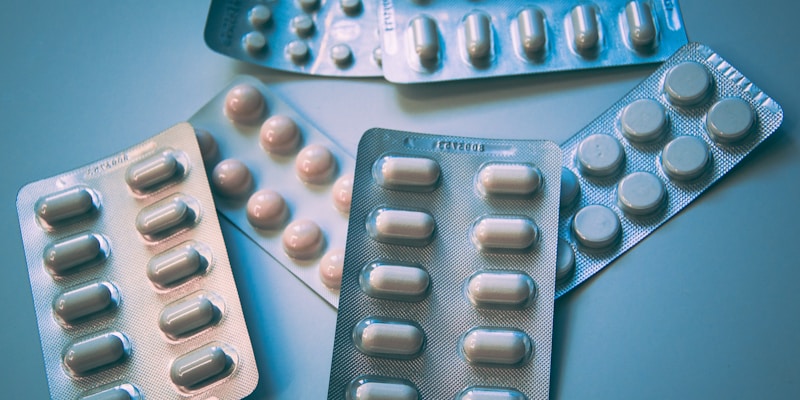
The financial stakes are not theoretical. A patient taking brand-name Lipitor pays roughly $350 per month. The generic equivalent - atorvastatin - costs $3 to $8. That is a savings of $342 per month, or $4,104 per year, for the same molecule at the same dose doing the same thing in your body. Multiply that across the average American who fills 12 prescriptions per year, and generic substitution represents one of the most impactful personal finance decisions you can make.
What the FDA Requires for Generic Approval
To get FDA approval, a generic drug must demonstrate:
- Same active ingredient, identical molecule as the brand-name drug
- Same dosage form, tablet, capsule, liquid, etc.
- Same strength, identical milligram dose
- Same route of administration, oral, injectable, topical, etc.
- Bioequivalence, the drug is absorbed into the bloodstream at the same rate and to the same extent as the brand version
What Is Bioequivalence?
This is the key test. The generic manufacturer must prove that their drug delivers the same amount of active ingredient to the bloodstream, at the same speed, as the brand-name drug. The FDA requires this to be within a tight 80-125% confidence interval, and in practice, most generics fall within 3-5% of the brand.
A massive 2009 FDA analysis of 2,070 bioequivalence studies found that generics differed from brand-name drugs by an average of just 3.56% in absorption rate. For reference, normal variation between batches of the same brand-name drug can be 3-5%. The difference between generic and brand is statistically indistinguishable from the difference between one batch of Lipitor and another batch of Lipitor.
Why Generics Cost 80-90% Less
It's not because they're lower quality. It's because:
- No R&D costs. The brand-name company spent $1-2 billion developing the drug and running clinical trials. The generic manufacturer doesn't have to repeat that work, they just have to prove bioequivalence.
- No marketing. Brand-name drugs spend millions on TV ads, doctor visits, and branding. Generics don't need to.
- Competition. Multiple manufacturers produce the same generic, driving prices down through competition. Atorvastatin (generic Lipitor) is made by a dozen companies competing on price.
The Patent-to-Generic Timeline
Understanding how generics reach the market explains why prices drop so dramatically:
- Patent period (20 years from filing). The brand manufacturer holds exclusive rights. No competition exists, so prices stay high. This period funds R&D cost recovery.
- Patent expiration. Other manufacturers can file ANDAs (Abbreviated New Drug Applications) with the FDA to produce generic versions.
- First generic (180-day exclusivity). The first generic approved typically gets 6 months of exclusivity. Prices drop 20-40% in this period.
- Multi-generic competition. Once multiple manufacturers are producing the same generic, prices plummet 80-95% within 1-2 years.
This cycle is why some blockbuster drugs remain expensive for years (their patents have not expired) while others cost pennies. Ozempic (semaglutide) is under patent until the early 2030s, which is why it costs $1,000/month. Atorvastatin's patent expired in 2011 - now it costs $3.
The price difference is staggering:
| Brand Name | Generic | Brand Price | Generic Price | Savings |
|---|---|---|---|---|
| Lipitor | Atorvastatin | $350/mo | $3-$8/mo | 97% |
| Zoloft | Sertraline | $380/mo | $4-$10/mo | 97% |
| Prilosec | Omeprazole | $250/mo | $3-$8/mo | 97% |
| Glucophage | Metformin | $300/mo | $4/mo | 99% |
| Cozaar | Losartan | $280/mo | $3-$7/mo | 98% |
| Synthroid | Levothyroxine | $85/mo | $3-$5/mo | 94% |
Where to Buy Generics for the Lowest Price
Not all pharmacies charge the same for generics. The spread between the cheapest and most expensive pharmacy can be 5x or more for the same generic drug:
| Generic Drug | Costco | Walmart | CVS | Walgreens |
|---|---|---|---|---|
| Atorvastatin 20mg | $2.81 | $4.00 | $15.99 | $18.49 |
| Lisinopril 20mg | $1.85 | $4.00 | $12.99 | $14.49 |
| Sertraline 100mg | $3.56 | $4.00 | $14.99 | $17.49 |
| Omeprazole 20mg | $3.07 | $4.00 | $16.49 | $19.99 |
| Metformin 1000mg | $3.22 | $4.00 | $11.99 | $13.99 |
The pattern is clear: warehouse pharmacies (Costco) and flat-rate programs (Walmart $4) consistently beat chain drugstores by 70-85%. For a deeper dive into pharmacy pricing, see our full cheapest pharmacy comparison. Costco does not require a membership for pharmacy purchases - you can walk in and fill your prescription at the pharmacy counter.
Common Myths About Generics - Debunked
Myth 1: "Generics are made in lower-quality factories"
False. The FDA inspects generic manufacturing facilities to the same standards as brand-name facilities. Many generic drugs are manufactured in the same factories as brand-name drugs, the same company often makes both. Pfizer, for example, manufactures both branded and generic drugs.
Myth 2: "Generics don't work as well"
False. Bioequivalence testing ensures identical clinical effect. The FDA's Orange Book lists all approved generics with their bioequivalence ratings. A rating of "AB" means the generic is therapeutically equivalent to the brand.
Myth 3: "My doctor says the brand is better"
Some doctors have brand preferences, often based on habit or pharmaceutical marketing rather than clinical evidence. If your doctor insists on brand-name, ask specifically why. In the rare cases where brand matters (see narrow therapeutic index drugs below), they should have a clinical reason.
Myth 4: "The fillers/inactive ingredients are different and cause problems"
Rarely relevant. Inactive ingredients (binders, fillers, dyes) can differ between generic and brand. In extremely rare cases, a patient may have a sensitivity to a specific inactive ingredient. This is not a quality issue, it's an individual allergy, and you'd work with your pharmacist to find a different manufacturer's generic.
The Few Exceptions: Narrow Therapeutic Index Drugs
For a small number of drugs, even minor absorption differences can be clinically meaningful. These are called "narrow therapeutic index" (NTI) drugs, where the difference between an effective dose and a toxic or ineffective dose is very small:
- Levothyroxine (thyroid), Small dose differences can cause symptoms. Once stabilized on a specific manufacturer, some endocrinologists recommend staying with it.
- Warfarin (blood thinner), Requires careful INR monitoring. Switching manufacturers may require dose adjustment.
- Anti-seizure medications, Some neurologists prefer brand-name for certain seizure drugs due to absorption consistency concerns.
- Lithium, Narrow therapeutic window, dose-sensitive.
Even for these drugs, the generic is still bioequivalent. The recommendation to stick with one manufacturer is about consistency, not quality. See our Walmart $4 guide, levothyroxine and warfarin are both on the list.
For a deeper dive into the science behind bioequivalence and drug formulation, Health Britannica covers pharmaceutical bioavailability in detail.
Authorized Generics vs. Standard Generics
There is a lesser-known category called "authorized generics" that bridges the gap between brand and standard generic. An authorized generic is manufactured by the brand-name company (or a partner) using the exact same formulation, same inactive ingredients, and same manufacturing facility as the brand - but sold at generic prices. For example, Pfizer sells an authorized generic of Lipitor that is literally Lipitor in a different box.
Authorized generics offer two advantages: they eliminate any concern about inactive ingredient differences, and they are available on day one of patent expiration (no ANDA review needed). The downside is they sometimes cost slightly more than standard generics from other manufacturers. Ask your pharmacist if an authorized generic is available for your medication - it can be a good middle ground for patients who are nervous about switching.
How Insurance Interacts with Generic Substitution
Most insurance plans use a tiered formulary that strongly incentivizes generics:
| Tier | Category | Typical Copay | Example |
|---|---|---|---|
| Tier 1 | Preferred generics | $0-$10 | Atorvastatin, metformin, lisinopril |
| Tier 2 | Non-preferred generics | $10-$25 | Some newer generics |
| Tier 3 | Preferred brand | $30-$60 | Brand drugs with no generic |
| Tier 4 | Non-preferred brand | $60-$100+ | Brand drugs with generic available |
| Tier 5 | Specialty | 20-33% coinsurance | Biologics, cancer drugs |
If your doctor writes "dispense as written" for a brand-name drug that has a generic, your insurance will charge you the Tier 4 copay instead of Tier 1. In many cases, the cash price for the generic at Costco ($2-$5) is cheaper than even your Tier 1 copay ($10). Always compare. See our insurance vs cash price guide for a detailed breakdown of when to skip insurance entirely.
How to Switch from Brand to Generic
- Ask your doctor. Most will switch you immediately - it's standard practice.
- Ask your pharmacist. Pharmacists can automatically substitute generics in most states unless the doctor writes "brand necessary" on the prescription.
- Check the price. Use our pharmacy comparison to find the lowest generic price.
- Monitor for the first month. While side effects from switching are rare, pay attention to how you feel. Report any changes to your doctor.
- Verify interactions. When switching medications, double-check that the generic doesn't interact with anything else you take. OmniRx's interaction checker covers 100+ common medications.
When Brand-Name Might Still Make Sense
- Your insurance copay for brand and generic is the same (some plans have this)
- You're on a narrow therapeutic index drug and well-controlled, disrupting what works may not be worth the savings
- You have a documented allergy to a specific generic manufacturer's inactive ingredients
- No generic exists yet (the drug is still under patent)
For drugs still under patent - like Ozempic, Humira, and Eliquis - see our guides on Ozempic savings and expensive prescription alternatives.
Upcoming Generic Launches to Watch (2026-2028)
Several blockbuster brand-name drugs are losing patent protection in the next few years. When generics launch, prices will drop 80-95%:
| Brand Drug | Generic Name | Current Monthly Cost | Expected Generic Cost | Expected Launch |
|---|---|---|---|---|
| Eliquis | Apixaban | $550 | $15-$40 | 2026-2027 |
| Jardiance | Empagliflozin | $580 | $20-$50 | 2027 |
| Xarelto | Rivaroxaban | $530 | $15-$40 | 2027 |
| Entresto | Sacubitril/Valsartan | $620 | $30-$80 | 2027-2028 |
| Farxiga | Dapagliflozin | $560 | $20-$50 | 2028 |
If you are currently paying full price for any of these brand-name drugs, a generic launch could save you $5,000-$7,000 per year. In the meantime, manufacturer savings cards and patient assistance programs can bridge the gap.
The Annual Savings Calculator
Here is a simple way to estimate what switching to generics would save you personally:
- List every brand-name drug you currently take.
- Look up whether a generic exists (search the FDA's Orange Book at fda.gov or ask your pharmacist).
- For each drug with a generic available, calculate: (brand price - generic price) x 12 months = annual savings.
- Add a pharmacy optimization step: price-check the generic at Costco, Walmart, and Cost Plus Drugs. The difference between the cheapest and most expensive pharmacy adds another 50-70% in savings.
A typical patient taking three brand-name drugs that have generic equivalents saves $8,000-$15,000 per year by switching. Even a single switch - say, from brand Lipitor ($350/month) to atorvastatin at Costco ($2.81/month) - puts $4,170 back in your pocket annually.
Key Takeaways
- Generic drugs contain the same active ingredient, same dose, and same bioavailability as the brand. The FDA requires this.
- Generics cost 80-90% less because manufacturers skip R&D and marketing costs, and multiple companies compete on price.
- In practice, generics differ from brand-name drugs by an average of just 3.56% in absorption - within normal batch-to-batch variation of the brand itself.
- The only exceptions worth noting are narrow therapeutic index drugs (levothyroxine, warfarin, lithium, some anti-seizure meds), where consistency between refills matters more than brand vs. generic.
- Where you fill generics matters almost as much as switching to generics. Costco charges $2-$4 for drugs that CVS sells for $12-$19.
- Several expensive brand-name drugs (Eliquis, Jardiance, Xarelto) are expected to go generic in 2026-2028, unlocking billions in patient savings.
Frequently Asked Questions
Are generic drugs FDA approved?
Yes. Every generic drug sold in the U.S. must receive FDA approval through an Abbreviated New Drug Application (ANDA). This process requires proof of bioequivalence to the brand-name drug, adherence to Good Manufacturing Practices, and ongoing FDA inspection of manufacturing facilities.
Why does my generic pill look different from the brand?
Generic drugs often have different colors, shapes, and markings because trademark law prevents generics from looking identical to the brand. The appearance is purely cosmetic, the active ingredient inside is the same. Different manufacturers may also use different inactive ingredients for the pill coating or filler.
Can I ask my pharmacist to switch me to a generic?
In most states, pharmacists can automatically substitute a generic unless the prescriber specifically writes "dispense as written" or "brand necessary." If you're currently taking a brand-name drug with a generic available, simply ask your pharmacist to switch. If the prescription requires brand, ask your doctor to allow generic substitution.
Are generics made overseas less safe than ones made in the U.S.?
The FDA inspects all manufacturing facilities that produce drugs sold in the U.S., regardless of location. Many generics are made in India, Israel, or Ireland - and many brand-name drugs are manufactured overseas as well. The FDA has the authority to block imports from any facility that fails inspection. While recalls do happen (for both generic and brand), the regulatory standard is the same.
What if I experience side effects after switching from brand to generic?
True pharmacological side effects from switching are extremely rare since the active ingredient is identical. However, some patients notice differences due to inactive ingredients (dyes, fillers, coatings). If you experience a reaction, ask your pharmacist to try a generic from a different manufacturer - there are often 5-10 manufacturers making the same generic, each with slightly different inactive ingredients. The nocebo effect (expecting problems and then perceiving them) is also well-documented in switching studies.
How do I know if a generic is available for my medication?
The fastest method: ask your pharmacist. You can also search the FDA's Orange Book (accessible at fda.gov) by brand name to see all approved generic equivalents. If no generic exists, the drug is likely still under patent. Your pharmacist can also tell you when the patent is expected to expire and whether a generic is in the FDA approval pipeline.
Get notified when new generics launch
When expensive brand drugs go generic, prices drop 80-90%. We track launches.
Keep reading
Sources and standards behind this page
Prescription prices in the United States are set through a documented chain of list prices, pharmacy benefit contracts and federal programs, and the sources below are the primary public records of how that chain works. They are linked so a reader can check a claim here without taking this page's word for it.
- FTC report on pharmacy benefit managers documents how the middlemen between an insurer and a pharmacy set what a drug costs at the counter.
- FDA Orange Book publishes the therapeutic-equivalence ratings that decide whether a cheaper generic may be substituted for a brand.
- FDA generic drug facts sets out what "generic equivalent" means and what a manufacturer must prove before selling one.
- Drugs@FDA is the federal database of approved drug products, which establishes whether a named product exists and in what form.
- DailyMed carries the current FDA labeling for every marketed drug product, including its approved strengths and forms.
- MedlinePlus drug information is the National Library of Medicine's consumer reference for what a given medication is and how it is used.
- CMS prescription drug coverage defines the rules a Medicare drug plan formulary must follow and how it may change during a plan year.
- Medicare.gov drug coverage (Part D) states what a Part D plan is required to offer a member and how its cost stages work.
- Medicare Plan Compare is the official tool for checking what a specific plan charges for a specific drug at a specific pharmacy.
- National Library of Medicine maintains the drug and health databases the sources above draw on.
This page describes how prescription pricing and discount programs work. It is not medical advice, and what a given person pays depends on their own plan, pharmacy and prescriber.