The 10 Most Expensive Prescriptions in America (and How to Pay Less)
Written and sourced by Vincent Wesley Couey, RxGrab founder. Updated .
Cut the cost around your prescriptions
As an Amazon Associate I earn from qualifying purchases.
These aren't obscure specialty drugs. They're medications taken by millions of Americans every day for common conditions - diabetes, blood clots, arthritis, high cholesterol. The retail prices are shocking, but so are the available discounts that most patients never learn about. For a comprehensive approach to paying less, start with our guide to cheap prescriptions.
The scale of the problem is staggering. Americans spend over $400 billion on prescription drugs annually - more per capita than any other country. The 10 drugs on this list alone account for tens of billions in annual U.S. spending. Yet for each one, there's a pathway to paying dramatically less. Most patients just never hear about it from their doctor or pharmacist.
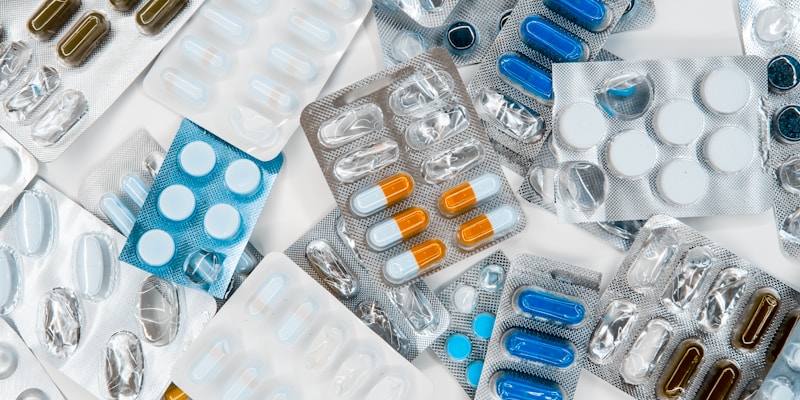
The 10 Most Expensive Commonly Prescribed Drugs
1. Humira (adalimumab), $7,200/month
Used for: Rheumatoid arthritis, psoriasis, Crohn's disease, ulcerative colitis
Humira was the best-selling drug in the world for 20 years, generating over $200 billion in lifetime revenue for AbbVie. Biosimilars finally arrived in 2023 - including Hadlima, Hyrimoz, and Cyltezo - at 55-85% lower cost. If you're still on brand Humira, ask your doctor about switching to a biosimilar.
Savings options: AbbVie's Complete savings card ($5/month with insurance), biosimilars ($1,000-$3,000/month), myAbbVie Assist PAP (free for qualifying patients).
Potential savings: Switching from brand Humira to a biosimilar saves $4,200-$6,200/month - or $50,400-$74,400 per year.
2. Ozempic/Wegovy (semaglutide), $900-$1,350/month
Used for: Type 2 diabetes (Ozempic), weight management (Wegovy)
The most talked-about drug in America. We wrote an entire guide: Ozempic cost without insurance.
Savings options: Novo Nordisk savings card (as little as $25/month with qualifying commercial insurance, maximum savings $100/month), NovoCare self-pay price ($349/month for Ozempic 0.25 mg, 0.5 mg or 1 mg and $499/month for 2 mg, as of May 2026), PAP (free for low-income uninsured patients).
Potential savings: The NovoCare self-pay price of $349/month on most Ozempic doses is far below the brand list price.
3. Eliquis (apixaban), $620/month
Used for: Blood clot prevention, atrial fibrillation, DVT/PE treatment
One of the most prescribed blood thinners. No generic is available, and generic apixaban cannot launch in the U.S. before April 1, 2028. Eliquis was among the first 10 drugs in Medicare price negotiation, and its negotiated Medicare price of $231 for a 30-day supply took effect on January 1, 2026.
Savings options: BMS/Pfizer co-pay card ($10/month with insurance), Pfizer RxPathways PAP (free for those who qualify; read the program's own page).
Potential savings: Manufacturer copay card drops out-of-pocket from $620 to $10/month - a $7,320/year reduction.
4. Xarelto (rivaroxaban), $580/month
Used for: Blood clot prevention, AFib, DVT/PE
Direct competitor to Eliquis. Generic rivaroxaban is available in the 2.5 mg strength (launched March 2025); the higher strengths remain brand-only.
Savings options: J&J Xarelto savings program ($10/month with insurance), PAP (free for those who qualify; read the program's own page).
5. Jardiance (empagliflozin), $580/month
Used for: Type 2 diabetes, heart failure
SGLT2 inhibitor with proven cardiovascular benefits. No generic is available as of October 2026. Jardiance's negotiated Medicare price of $197 for a 30-day supply took effect on January 1, 2026.
Savings options: Boehringer Ingelheim Jardiance savings card (with commercial insurance), BI Cares Foundation PAP (free for eligible patients).
6. Trulicity (dulaglutide), $900/month
Used for: Type 2 diabetes
Another GLP-1 receptor agonist. Similar efficacy to Ozempic for diabetes management.
Savings options: Lilly savings card ($25/month with insurance), Lilly Cares PAP (free).
7. Entresto (sacubitril/valsartan), $620/month
Used for: Heart failure
Significantly reduces hospitalization and death from heart failure. AB-rated generic sacubitril/valsartan launched in the U.S. in July 2025. Entresto is another drug selected for Medicare price negotiation.
Savings options: Novartis co-pay card ($10/month with insurance), Novartis PAP (free).
8. Dupixent (dupilumab), $3,600/month
Used for: Eczema, asthma, nasal polyps
Biologic for moderate-to-severe atopic dermatitis. One of the fastest-growing drugs by revenue.
Savings options: Dupixent MyWay copay card ($0 with qualifying insurance), Sanofi PAP (free).
9. Skyrizi (risankizumab), $5,800/month
Used for: Psoriasis, psoriatic arthritis, Crohn's disease
IL-23 inhibitor biologic. Administered as injection every 3 months (maintenance).
Savings options: AbbVie Complete savings ($0-$5/dose with insurance), myAbbVie Assist PAP (free).
10. Insulin (various), $300-$1,000/month
Used for: Type 1 and Type 2 diabetes
The price of insulin has been a national scandal. Recent legislation (Inflation Reduction Act) capped Medicare insulin copays at $35/month. Eli Lilly capped all insulin at $35/month. Walmart's ReliOn brand is $25/vial.
Savings options: $35/month cap (Lilly, Medicare), Walmart ReliOn ($25/vial), manufacturer PAPs (free), state insulin safety net programs. Lilly, Novo Nordisk and Sanofi each publish their own $35 terms, exclusions and expiry dates, read 26 October 2026, in our insulin cash price guide.
What These Drugs Actually Cost to Manufacture
The gap between manufacturing cost and retail price reveals the true scale of pharmaceutical markups:
| Drug | Estimated Mfg. Cost | U.S. Retail Price | Markup |
|---|---|---|---|
| Eliquis (30-day) | $2-$5 | $620 | 12,400-31,000% |
| Insulin (vial) | $2-$6 | $300+ | 5,000-15,000% |
| Jardiance (30-day) | $1-$3 | $580 | 19,300-58,000% |
| Xarelto (30-day) | $3-$7 | $580 | 8,300-19,300% |
These manufacturing cost estimates come from academic analyses and generic drug pricing in other countries. They don't account for R&D, clinical trials, or marketing - costs the pharmaceutical companies cite to justify pricing. But the markups explain why generics can enter the market at 80-90% discounts and still be profitable: the manufacturing itself is cheap.
This is also why Cost Plus Drugs can offer transparent pricing on generics. When the raw ingredient cost for a 90-day supply is $1.50, a 15% markup plus standard shipping (from $5.25) still yields a sub-$7 price. The traditional pharmacy supply chain adds hundreds of percentage points in margin between manufacturer and patient.
The Universal Savings Playbook for Expensive Drugs
Regardless of which expensive drug you take, follow this hierarchy:
- Check for a generic or biosimilar. The price drops 50-90% when patents expire. Ask your doctor.
- Use the manufacturer's copay card. Nearly every brand drug has one. Many reduce your copay to $0-$25 with qualifying insurance.
- Apply for the manufacturer's PAP. If your income qualifies, the medication is free. See our complete PAP guide.
- Ask about therapeutic alternatives. There may be a cheaper drug in the same class that works equally well. Your doctor can advise.
- Ask about importing. The FDA generally prohibits importing prescription drugs for personal use, with narrow exceptions, and a drug bought abroad is outside U.S. consumer protections, so we do not list foreign prices.
- Appeal insurance denials. If your insurance won't cover the drug, appeal with your doctor's help. Success rates are surprisingly high.
For the science behind these medications and how they compare to non-prescription alternatives, Health Britannica covers evidence-based chronic disease management.
How to Apply for Patient Assistance Programs (PAPs)
PAPs are the most underused savings tool in American healthcare. Nearly every major pharmaceutical company operates one, and they provide free medication to patients who qualify. Here's how to navigate the process:
- Find the program. Search "[drug name] patient assistance program" or visit the manufacturer's website. NeedyMeds.org and RxAssist.org maintain comprehensive databases.
- Check income requirements. Each program sets its own limit, usually a multiple of the federal poverty level ($15,960 for a single adult in 2026, per HHS). Read the limit on the program's own page.
- Gather documentation. You'll typically need proof of income (tax return or pay stubs), insurance information (or proof you're uninsured), and a prescription from your doctor.
- Submit the application. Most can be completed online. Your doctor's office may need to submit a portion of the form.
- Wait 2-4 weeks. Approval timelines vary. Plan ahead so you don't run out of medication while waiting.
The approval rates are higher than most people expect. Manufacturers want patients on their drugs - it builds loyalty and generates data. For our detailed walkthrough, see the complete PAP guide.
The Hope: Patent Expirations Coming Soon
Several blockbuster drugs have lost or are losing patent protection, which brings generic competition and massive price drops:
| Drug | Expected Generic | Expected Price Drop |
|---|---|---|
| Eliquis | April 2028 at the earliest | 80-90% |
| Xarelto | 2.5 mg launched March 2025; other strengths pending | 80-90% |
| Jardiance | Not yet scheduled | 80-90% |
| Entresto | Launched July 2025 | 70-85% |
| Ozempic (semaglutide) | 2030s | 80-90% |
When a drug goes generic, it typically becomes available on Walmart's $4 list or Cost Plus Drugs within months. We'll update our generic vs. brand guide as these launch.
The Inflation Reduction Act: What's Changed
The 2022 Inflation Reduction Act introduced the most significant drug pricing reforms in decades. Here's what matters for patients on expensive drugs:
- Medicare Part D out-of-pocket cap: $2,000 in 2025 and $2,100 in 2026. Previously, patients in the "catastrophic" phase still paid 5% of drug costs, which could mean thousands per month for expensive biologics.
- Medicare drug price negotiation: The government can now negotiate prices on select high-cost drugs. The first 10 drugs were negotiated in 2024, with negotiated prices taking effect in 2026. Eliquis, Jardiance, and Entresto are on the list.
- Insulin cap: Medicare patients pay no more than $35/month for insulin. Several manufacturers extended this cap to all patients, not just Medicare.
- Inflation penalties: Drug companies that raise prices faster than inflation must pay rebates to Medicare. This slows the annual price increases that have historically been 5-10% per year.
These changes primarily benefit Medicare patients. If you're under 65 with private insurance, the direct impact is limited - but the competitive pressure is pushing some manufacturers to extend savings programs to all patients.

Frequently Asked Questions
Why are prescription drugs so expensive in the U.S.?
The U.S. is the only major country that doesn't negotiate drug prices at a national level (though under the Inflation Reduction Act, Medicare's first negotiated prices took effect on January 1, 2026). Drug companies set prices based on what the market will bear, and insurance/PBM middlemen add costs. The same drug often costs 2-10x more in the U.S. than in Canada or Europe.
What is a biosimilar?
A biosimilar is the biologic equivalent of a generic drug. Biologics (like Humira, Ozempic) are made from living cells and are more complex than traditional chemical drugs. Biosimilars must demonstrate they're highly similar to the original biologic with no clinically meaningful differences. They're typically 55-85% cheaper than the brand.
Can I use manufacturer copay cards with Medicare?
No. Federal law prohibits Medicare patients from using manufacturer copay cards or coupons. However, the Inflation Reduction Act capped Medicare Part D out-of-pocket costs at $2,000 for 2025, indexed to $2,100 for 2026, which helps with expensive drugs. Medicare patients should also check manufacturer PAPs, which some companies offer separately for Medicare enrollees.
Is it safe to buy prescription drugs from Canada?
Canadian pharmacies dispensing Health Canada-approved medications are subject to rigorous safety standards comparable to the U.S. The FDA has historically discouraged individual importation, but enforcement against personal-use quantities (90-day supply or less) is minimal. The risk is buying from illegitimate online pharmacies that claim to be Canadian but ship from other countries. Stick to CIPA-verified (Canadian International Pharmacy Association) pharmacies.
What if I can't afford my medication even with assistance programs?
If you've exhausted copay cards and PAPs, ask your doctor about therapeutic alternatives - there may be a cheaper drug in the same class. Hospital and community health center pharmacies sometimes offer additional discounts. State pharmaceutical assistance programs exist in many states. As a last resort, organizations like the Patient Access Network Foundation and HealthWell Foundation provide copay assistance grants.
The Bottom Line
- Nobody should pay full retail for expensive brand-name drugs. Every drug on this list has at least one pathway to 80-100% savings.
- Manufacturer copay cards are the fastest savings tool - most reduce copays to $0-$25/month and can be activated in minutes.
- Patient assistance programs provide free medication for qualifying patients. Income thresholds are higher than most people assume (up to about $63,840/year for a single adult at 400% FPL).
- Biosimilar launches are the permanent solution. When Humira biosimilars arrived, costs dropped 55-85%. Generic Entresto arrived in July 2025, generic Xarelto is available in the 2.5 mg strength, and generic Eliquis cannot launch before April 1, 2028.
- The Inflation Reduction Act caps Medicare Part D out-of-pocket costs ($2,100 for 2026) and has put negotiated prices on select drugs into effect - the first meaningful federal action on drug pricing.
Get the free GLP-1 Cash-Pay Savings Sheet
Free. The download link appears right after you sign up. Price alerts are not live yet; we will only email when they are.
Keep reading
Sources and standards behind this page
Prescription prices in the United States are set through a documented chain of list prices, pharmacy benefit contracts and federal programs, and the sources below are the primary public records of how that chain works. They are linked so a reader can check a claim here without taking this page's word for it.
- FTC report on pharmacy benefit managers documents how the middlemen between an insurer and a pharmacy set what a drug costs at the counter.
- FDA Orange Book publishes the therapeutic-equivalence ratings that decide whether a cheaper generic may be substituted for a brand.
- FDA generic drug facts sets out what "generic equivalent" means and what a manufacturer must prove before selling one.
- Drugs@FDA is the federal database of approved drug products, which establishes whether a named product exists and in what form.
- DailyMed carries the current FDA labeling for every marketed drug product, including its approved strengths and forms.
- MedlinePlus drug information is the National Library of Medicine's consumer reference for what a given medication is and how it is used.
- CMS prescription drug coverage defines the rules a Medicare drug plan formulary must follow and how it may change during a plan year.
- Medicare.gov drug coverage (Part D) states what a Part D plan is required to offer a member and how its cost stages work.
- Medicare Plan Compare is the official tool for checking what a specific plan charges for a specific drug at a specific pharmacy.
- National Library of Medicine maintains the drug and health databases the sources above draw on.
This page describes how prescription pricing and discount programs work. It is not medical advice, and what a given person pays depends on their own plan, pharmacy and prescriber.